From Collapse to Comeback: A Blueprint for Fixing Oklahoma State Athletics
(This column represents the opinions of an OSU alum and fan.)
Oklahoma State University finds itself at a crossroads: once a model of stability and consistency in the Big 12, OSU athletics is now defined by frustration, confusion and a loss of direction. The decline isn’t just measured in wins and losses—it’s measured in leadership, alignment, and trust.
The Cowboys have dropped 14 straight conference football games, capped by a 42–0 shutout in Lubbock. Yet this column isn’t about piling on. It’s about offering a way out. The problems plaguing Oklahoma State are real, but they’re solvable—if the university is willing to evolve.
The On-Field Collapse: 14 Straight Big 12 Losses (and Counting)
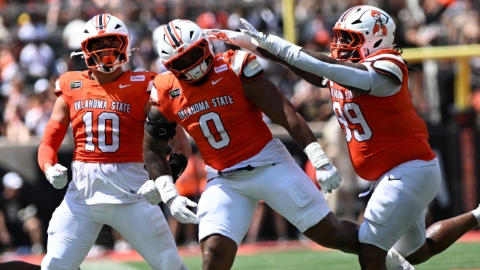
For years, Oklahoma State football was a fixture in the Big 12 title conversation. Now, it’s unrecognizable. The program has lost 14 consecutive league games, most by lopsided margins—39–17 to Houston, 49–17 to Cincinnati on Homecoming, and the 42–0 embarrassment at Texas Tech.
Defensively, the Cowboys have surrendered more than 38 points in 11 straight conference contests. Offensively, there’s no rhythm, no confidence, and no clear identity. At 1–7 overall and winless in conference play, this isn’t a skid—it’s institutional rot.
Meanwhile, peers are passing OSU by. Texas Tech, the same program that delivered the 42–0 beating, has redefined what aggressive NIL investment can look like. The Matador Club, Tech’s booster collective, has raised over $63 million since 2022 and recently signed five-star tackle Felix Ojo to a three-year, $5.1 million guaranteed NIL deal—the type of bold move that signals ambition.
In Stillwater, by contrast, NIL remains fractured and reactive. The game has changed, and OSU has not.
Coaches Succeeding in Spite of Chaos
Even amid institutional stagnation, Oklahoma State’s coaches continue to produce.
Men’s basketball coach Steve Lutz, only months into his tenure, opened eyes with an overtime upset of No. 20 Auburn—a 97–95 statement win over a 2025 Final Four team.
Women’s coach Jacie Hoyt followed her NCAA Tournament season with a Top-10 transfer class (No. 7 per ESPN), adding Amari Whiting and Haleigh Timmer to an already talented core.
Softball coach Kenny Gajewski has delivered three Women’s College World Series trips in four seasons, all while operating in a 23-year-old, 750-seat stadium—by far the smallest among elite programs.
And in wrestling, David Taylor produced immediate results. In his debut season, the Cowboys finished third nationally, crowned two NCAA champions, and signed a Top-five recruiting class—on a budget that would barely cover travel for Penn State.
These successes prove OSU still attracts elite minds and relentless competitors. But they also reveal a harsh truth: the university’s best results are happening despite its leadership, not because of it.
A Leadership Vacuum at the Top
Oklahoma State’s problems trace back to governance. The OSU/A&M Board of Regents and senior administration have created a culture of opacity and misalignment that filters down through every program.
1.) Secretive Regents Meetings
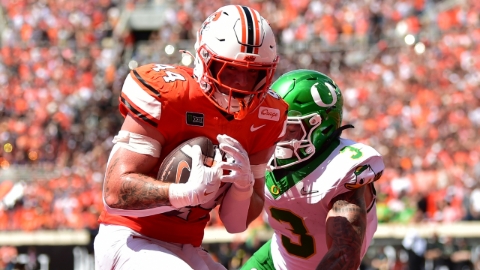
Reports surfaced that a quorum of regents traveled together to the Oregon football game earlier this season—potentially conducting business outside public view. Under Oklahoma’s Open Meeting Act, such gatherings require advance notice. Whether or not violations occurred, the optics are indefensible. Decisions affecting thousands of students and athletes should never be hashed out on a road trip.
2.) The Forced Resignation of President Kayse Shrum
The February 3, 2025 resignation of President Shrum created a leadership void at the worst possible time. A popular, reform-minded leader, she was forced out amid a financial probe that the Board has never fully explained. Even state higher-ed officials were blindsided. Removing the president who championed innovation left the university rudderless just as the athletic department desperately needed vision.
3.) The Poorly Timed Extension for the Athletic Director
If the goal was to inspire confidence, the handling of Athletic Director Chad Weiberg’s contract did the opposite. Reports of a new four-year extension surfaced the same day Mike Gundy was fired—an eyebrow-raising coincidence that left many questioning the message being sent.
Then, for reasons never clearly explained, the official announcement didn’t arrive until nearly a month later. To outside observers, it looked like someone was saying, “do my bidding and I’ll take care of you later.”
Extending Weiberg wasn’t inherently wrong—he’s made strong hires and led several solid initiatives—but the process created a perception of political maneuvering at a time when transparency was most needed. Optics matter, and in this case, they couldn’t have been worse.
4.) Fundraising Dysfunction
OSU’s once-cohesive fundraising machine has splintered. Collectives operate independently; programs compete for the same donor dollars. As Gajewski noted, “everybody’s fighting over the same pool.” When football falters, every sport feels the impact. Without a unified vision connecting the OSU Foundation, the POSSE Club, and the NIL collectives, the university leaves both money and momentum on the table.
5.) The Chris Young Fiasco
Nothing underscores the leadership gap more than the dismissal of Director of Tennis Chris Young—one of the most accomplished administrators on campus. Young built nationally ranked programs, raised millions for facilities, and maintained top academic performance, yet he was abruptly let go amid vague “tampering” concerns.
In a 2025 college-sports landscape where tampering is practically institutionalized, that justification rings hollow. OSU didn’t just lose a coach; it lost a proven relationship-builder and fundraiser—precisely the type of leader the athletic department claims it needs.
The System Is Broken—But Not Beyond Repair
OSU’s structure prioritizes secrecy over strategy. Decisions are reactive, not visionary. The result: fractured donor confidence, inconsistent messaging, and declining competitive relevance. This isn’t about bad luck—it’s about bad leadership.
The fix begins with modernization and professionalization.
Modernizing OSU: NIL and the General Manager Model
1.) Centralize NIL Operations
Ohio State’s partnership with Learfield to create the Buckeye Sports Group (BSG) provides a proven template. BSG functions as an in-house NIL agency, employing full-time professionals who negotiate deals, manage contracts, and build athlete brands.
Oklahoma State should follow that model—but take it one step further. True NIL must provide a return on investment for the people funding it. Donors shouldn’t just “give” money; they should participate in a value-driven ecosystem that connects their businesses directly with OSU athletes and fans.
That means structured campaigns that deliver measurable marketing exposure—through player appearances, social media integrations, and branded content—supported by transparent analytics. When donors become partners, not patrons, the system sustains itself. NIL should reward creativity and commerce, not just generosity.
2.) Build a Unified Booster Coalition
Texas Tech’s Matador Club has shown what alignment and professionalism can achieve: $63 million raised from 3,500 donors in just a few years. The secret isn’t just volume—it’s clarity. Donors know where their money goes and what impact it creates.
OSU’s base is every bit as passionate but needs direction and accountability. A single, unified collective—working in direct coordination with the athletic department—could manage NIL funds like business portfolios, pairing athletes with partners whose marketing goals align with the Cowboy brand. The more measurable the return, the more repeatable the investment.
3.) Adopt the General Manager Model for Football
Modern programs are adding General Managers to handle roster management, NIL budgets, recruiting strategy, and transfer-portal operations—bridging the gap between coaches and administrators.
Texas Tech’s GM James Blanchard calls this “the golden age of personnel management,” and he’s right. OSU should follow suit. A GM would ensure NIL dollars are allocated strategically—rewarding performance, leadership, and marketability while maintaining balance and compliance.
In other words, OSU must start running its athletic department like a business. Data, structure, and ROI-driven decision-making should replace gut instinct and backroom politics.
The Path Forward
Oklahoma State has always thrived when it’s bold. The fan base is loyal, the facilities are strong, and the talent pipeline in Oklahoma and Texas remains deep. What’s missing is direction from the top.
If the Board of Regents and athletic administration can’t provide that direction, new leadership will eventually have to. Coaches like Lutz, Hoyt, Gajewski, and Taylor have already proven what’s possible with limited resources. The question is how long they’ll stay if the university continues to lag behind its peers.
This is a make-or-break moment. OSU’s proud history—from Eddie Sutton’s Final Fours to Mike Gundy’s New Year’s Six bowls—shows what’s possible when leadership and vision align. That potential hasn’t disappeared; it’s waiting to be reignited.
The fans are still here. The donors are still willing. The athletes are still fighting. What’s needed now is courage and competence at the top.
OSU’s next chapter will be defined not by nostalgia or excuses, but by whether its leaders can embrace a new model—one where NIL is a business, not a donation; where boosters are partners, not checkbooks; and where transparency replaces politics.
The Cowboys can come back from this—but only if those in charge stop managing for comfort and start leading for change.
Go Pokes.