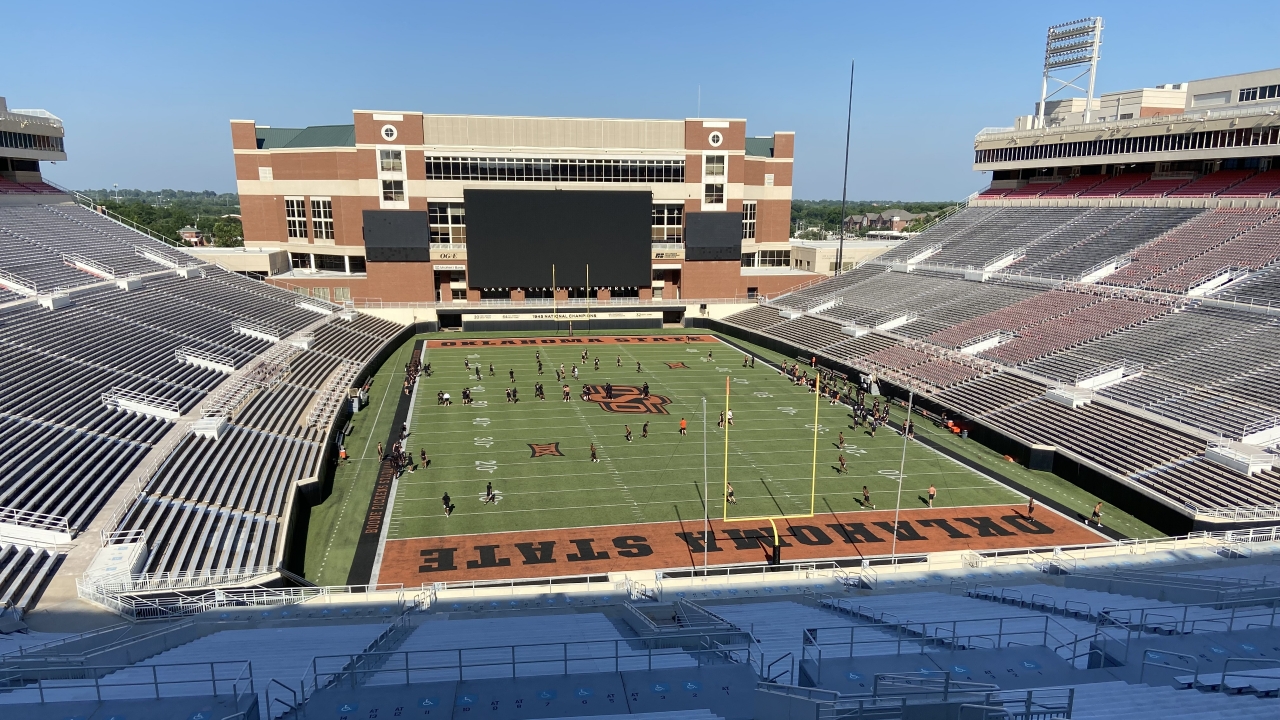
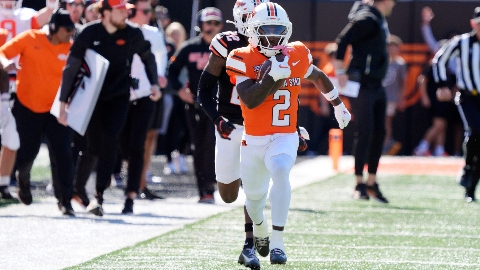
As Oklahoma State football kicks off its 2025 home schedule with a Thursday night matchup against UT Martin on ESPN+, fans are left wondering why a Top 25 program is playing not one, but two weeknight home games this fall in Stillwater. The Cowboys will also face Tulsa on a Friday night ESPN primetime broadcast later in September.
Weeknight home games are rare for established programs, and for good reason: they disrupt the rhythm of a gameday weekend, slash hotel and restaurant revenues, reduce merchandise and royalty sales that flow back to OSU, and give off the appearance that a national brand like Oklahoma State is settling for second-rate treatment. The bigger frustration? The UT Martin opener doesn’t even bring the payoff of national TV exposure — it’s tucked away on ESPN+, where only paying subscribers will see it.
The Weekend Economy of OSU Football
Oklahoma State football Saturdays are more than just games — they’re an economic engine for Stillwater. A traditional Saturday home game fills the town for three days, pumping millions into hotels, restaurants, and retail.
Hotel revenue: Stillwater has about 3,000 rooms. On a typical gameday weekend, both Friday and Saturday nights sell out. At $120 per night, that’s $720,000 in hotel revenue per game.
Food and drink: Visitors eat out multiple times across the weekend. If 20,000 fans spend $100 per day, that’s $2 million in dining and bar sales.
Retail and merchandise: Fans shop before heading home. Jerseys, polos, and tailgate gear can push $500,000–$1 million in retail sales per weekend, much of which pays royalties back to OSU.
Add it together, and a typical Saturday home game generates $3–$5 million for Stillwater.
The Weeknight Effect on Stillwater Businesses
Weeknight games tell a very different story. Instead of rolling in Friday and leaving Sunday, most fans drive up the day of, eat once, and head home after the game.
Hotels: Occupancy falls to 30–40%, dropping revenue from $720,000 to $200,000–$300,000.
Food and drink: Pre-game and post-game meals only, cutting sales from $2 million to about $1 million.
Retail and merchandise: With no Saturday or Sunday shopping window, sales shrink to$250,000–$400,000.
The bottom line? A weeknight home game brings only $1.5–$2 million in local revenue. That’s less than half of what Stillwater typically sees on a weekend. With two such games this season, the city is looking at a $3–$6 million loss.
Why It Hurts Oklahoma State, Too
This isn’t just about hotels and restaurants. The hit ripples back into OSU Athletics. The businesses that lose revenue on weeknight games are the same ones buying signage in Boone Pickens Stadium, sponsoring Cowboy Radio, and donating to OSU Athletics. When they lose, their ability to give back shrinks.
Even the university’s own bottom line takes a hit. Licensed merchandise sales — jerseys, polos, hats, and tailgate gear — all pay royalties directly to OSU. If two weeknight games cut retail by $500,000–$1 million, the school itself loses six figures in royalties.
So yes, ESPN gets its Thursday night inventory. But the Cowboys and Stillwater absorb the cost. And in the case of UT Martin, it’s not even ESPN primetime — it’s ESPN+ streaming only.
Second-Rate Scheduling Sends the Wrong Message
There’s also a perception problem. Weeknight home games are usually reserved for programs outside the Top 25 — inventory fillers for television, not showcase events.
Oklahoma State is not a second-rate program. The Cowboys have lived in the Top 25 under Mike Gundy, played in New Year’s Six bowls, and consistently represented the Big 12 on the national stage. Agreeing to two weeknight home games — especially when only one (Tulsa on ESPN Friday night) gets a prime TV slot — sends the wrong message: that OSU is willing to settle for second-rate treatment.
Alabama doesn’t host Thursday night games. Neither does Georgia, Michigan, or Penn State. You know who does? Programs clawing for exposure — not established ones.
The Big Question for OSU Football
At what point does the exposure stop being worth it? Nobody’s saying OSU should never play a Thursday or Friday game again. But two in the same season? Both in Stillwater? That’s more than inconvenient. It’s expensive.
For Stillwater, it means millions in lost hotel, restaurant, and retail revenue. For OSU, it means fewer royalties and weaker local sponsorships. For fans, it means less time to enjoy the full gameday experience that makes Cowboy football special. And in the case of UT Martin, the “exposure” isn’t even on national television.
Cowboy fans will still show up, because that’s what we do. But make no mistake: this isn’t a harmless scheduling quirk. It’s a decision that costs millions, weakens the tradition of gameday weekends, and makes a Top 25 program look like it’s willing to settle for second-rate treatment.